
If you want drug counselor work that feels real, you need a plan that matches the job, not vague advice. This post breaks down what a fulfilling career in substance use counseling looks like day to day, what skills you need to stay effective, and how to start building a substance use counselor career without wasting time. If CASAC in NY is on your path, you will also learn the steps that connect training to supervised hours and real paid roles.
You want a substance use counseling career that pays, feels real, and does not drain the life out of you. You want a drug counselor who works that matters on a Tuesday afternoon, not just on paper. You want a fulfilling substance counselor career where you can look your client in the eye and know you showed up with skill, not guesses.
So here is the deal. You do not need another vague promise. You need a clear path, clean steps, and training that matches the job you will do. Are you ready to stop circling and start building your credentials? Yes. Then you start by choosing a track that fits your life, your schedule, and the rules in your state, including CASAC in NY if New York is part of your plan.
Understanding Substance Use Counseling
Substance use counseling is a specialized field focused on helping individuals overcome substance use disorders (SUD). Counselors in this domain provide essential support, guidance, and education to clients and their families. They work in various settings, including rehabilitation centers, hospitals, and community health organizations, addressing the complex nature of addiction.
Advocacy and Awareness
Substance use counselors play a crucial role in advocating for policy changes and raising awareness about addiction issues. By engaging in community outreach and education programs, they can effectively help reduce stigma, foster empathy, and promote a better understanding of substance use disorders. Their efforts support prevention and recovery initiatives, strengthening community health and resilience. In New York, Certified Alcoholism and Substance Abuse Counselors (CASAC in NY) are essential in implementing these programs, bringing specialized expertise and dedication to treatment and prevention efforts. CASACs collaborate with families, healthcare providers, and community organizations to tailor interventions that address local needs. Their work not only enhances individual recovery journeys but also contributes to broader public health goals, making a meaningful impact across diverse populations.
Conclusion
A fulfilling substance use counseling career is real work with real impact. Drug counselor work puts you in the room when someone is tired of losing, tired of lying, and ready to try again. You will face hard days, but you will also watch people rebuild their lives in small, measurable steps. If CASAC in NY is part of your plan, start with the right number of education hours and a clear path to get into the field and start earning while you build experience.
Educational Enhancement
is approved to provide Certified Addiction Counselor Education by the following boards:
New York
OASAS Provider #0415
NAADAC Provider #254148
Florida
Education Provider #5486-A
Georgia
ADACBGA #2024-4-0002
GACA # 25-950-52
Tennessee
Approved by
Dept of Health
North Carolina
Approved by NCSAPPB
Provider #254148.
The Role of a Substance Use Counselor
As a substance use counselor, your primary responsibility is to assist clients in navigating their recovery journey. This involves:
- Individual Counseling: Meeting clients regularly to discuss their recovery goals, challenges, and progress.
- Group Therapy Facilitation: Leading group sessions where clients can share experiences and support one another.
- Crisis Intervention: Providing immediate support during moments of crisis or relapse.
- Family Involvement: Educating and involving family members in the recovery process to foster a supportive environment.
Skills Required
To excel in this field, certain skills are essential:
- Empathy and Compassion: Understanding the struggles of addiction and providing a non-judgmental space for clients.
- Strong Communication: Effectively conveying ideas and listening to clients’ concerns.
- Problem-Solving: Developing tailored strategies to help clients overcome obstacles in their recovery.
- Cultural Competence: Being aware of and sensitive to the diverse backgrounds of clients.
The Rewards of a Substance Use Counseling Career
Choosing a career in substance use counseling can be incredibly rewarding, offering the opportunity to make a meaningful difference in individuals’ lives. It requires compassion, patience, and strong communication skills to effectively support those struggling with addiction and guide them toward recovery and healthier lifestyles.
Here are some of the key benefits:
Making a Positive Impact
One of the most fulfilling aspects of this career is the ability to make a tangible difference in people’s lives. Witnessing a client’s transformation—from struggling with addiction to achieving sobriety—can be profoundly gratifying. Each success story reinforces the importance of your work and the positive impact you have on individuals and their families.
Personal Growth and Development
Working in a fulfilling substance counselor career role not only helps others but also fosters your personal growth. You’ll gain insights into human behavior, develop resilience, and learn valuable coping strategies that can enhance your own life. The challenges faced in this profession often lead to self-reflection and a deeper understanding of your values and beliefs.
Job Security and Demand
The demand for substance use counselors is on the rise, reflecting a growing recognition of the importance of mental health and addiction treatment in public health initiatives. According to the U.S. Bureau of Labor Statistics, the field is projected to grow significantly in the coming years, driven by increased awareness and the expanding need for specialized care. This growth translates into numerous job opportunities across settings such as outpatient clinics, hospitals, community health organizations, and private practices, ensuring that qualified professionals are in high demand to meet the needs of diverse populations seeking help. As tensions, uncertainty, and stress build within the country, drug counselors’ work will increase exponentially. The need for highly skilled, trained professionals is constantly growing.
Flexibility in Work Environment
Substance use counselors have the flexibility to work in diverse settings, offering a variety of career paths within the field. Whether you prefer a clinical setting, a community health center, or even private practice, there are numerous options available for those pursuing a career as a drug counselor. This variety allows you to find a work environment that aligns with your personal preferences and lifestyle, making it easier to find a role that suits your skill set and professional goals. The field of drug counseling is dynamic and rewarding, offering opportunities to make a meaningful difference in individuals’ lives while also fostering personal growth and development in your career.
Competitive Salary
While the salary for substance use counselors can vary significantly depending on factors such as geographic location, years of experience, educational background, and the specific organization or setting they work in, many professionals in this field earn a competitive wage that reflects their specialized skills and dedication. Those who pursue additional certifications and specialized drug counselor work training often find increased opportunities for higher-paying roles and leadership positions. Moreover, advancements in the field and ongoing education can lead to broader career paths, including supervisory, consulting, or teaching positions. The demand for qualified substance use counselors remains strong, especially as awareness of mental health and substance use issues continues to grow, further boosting earning potential and job stability. A fulfilling career in substance use counseling awaits you.
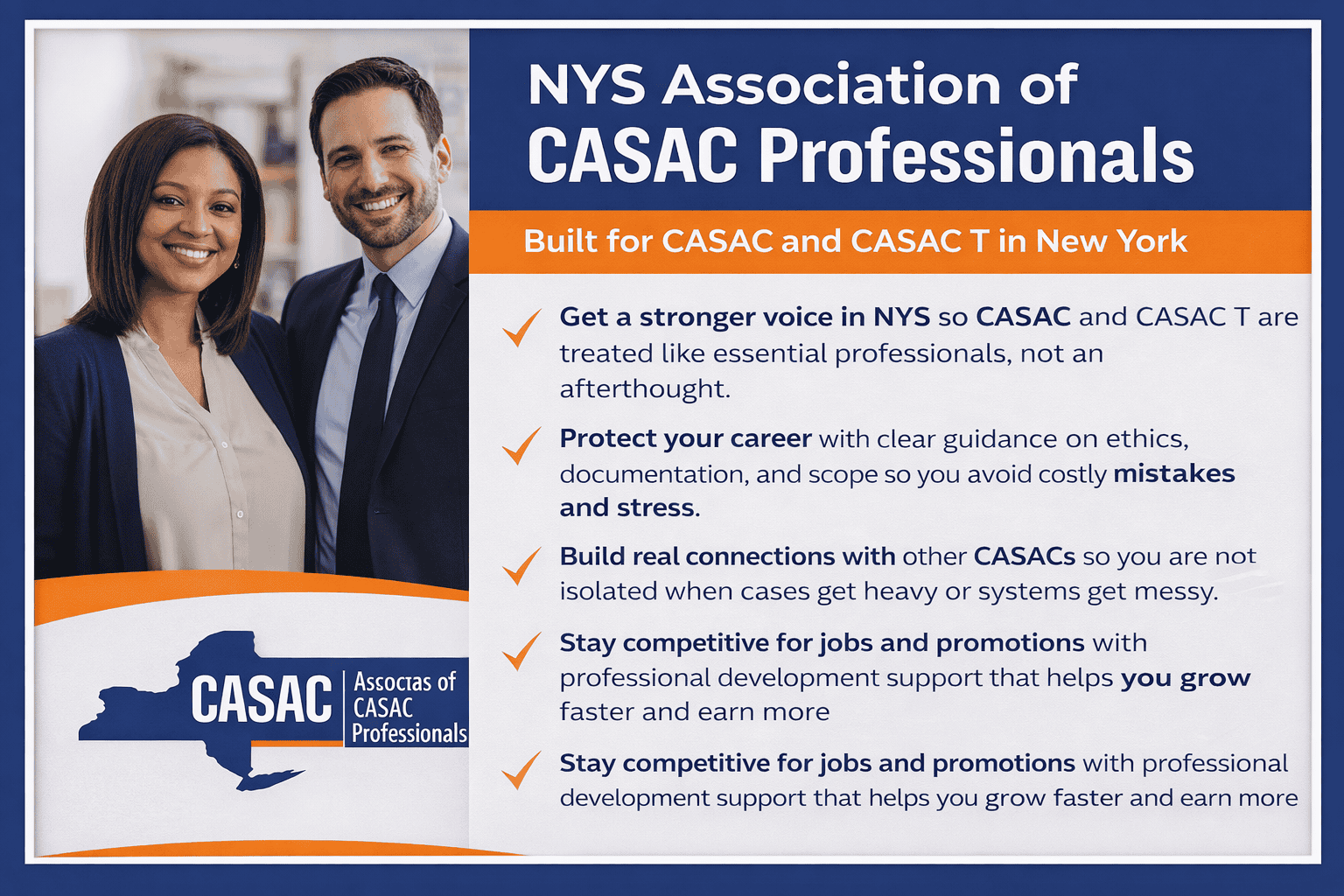
If you’re a CASAC in NY or CASAC T
Challenges Faced in Substance Use Counseling
While the rewards of being a substance use counselor are significant, such as helping individuals reclaim their lives and recover from addiction, it’s important to acknowledge the considerable challenges that come with this profession. These include drug counselor work, such as emotional strain, high stress levels, dealing with resistant or relapsed clients, and the need for ongoing education to stay current with treatment methods.
Emotional Toll
Working with individuals struggling with addiction can be emotionally taxing. Counselors often witness clients facing significant hardships, which can lead to feelings of frustration, sadness, or helplessness. It’s crucial to develop self-care strategies to manage these emotions effectively.
High-Stress Environment
The nature of substance use counseling can be high-pressure, especially during crisis situations. Counselors must remain calm and composed while providing support, which can be challenging in intense moments.
Continuous Learning
The field of addiction treatment is constantly evolving. Staying up to date on the latest research, treatment modalities, and best practices requires a commitment to lifelong learning. This can be both a challenge and an opportunity for growth.
Steps to Becoming a Substance Use Counselor
If you’re considering a fulfilling career as a substance use counselor, pursuing it can be highly rewarding. It offers the opportunity to make a meaningful difference in individuals’ lives, helping them overcome addiction and regain stability. This profession requires strong empathy, communication skills, and dedication. By becoming a substance use counselor, you fulfill a vital role in recovery efforts, providing support, guidance, and hope to those in need, which can be deeply rewarding both personally and professionally.
Here’s a roadmap to get you started:
Educational Requirements
Certification and Licensing
- Obtain Certification: Depending on your state, you may need to obtain certification as a substance use counselor. For example, in New York, you can pursue the Credentialed Alcoholism and Substance Abuse Counselor (CASAC in NY) designation.
- Pass Licensing Exams: Many states require counselors to pass a licensing exam to practice legally.
Educational requirements, the Educational Enhancement way
You do not need a bachelor’s or master’s degree to start training for certification in Florida, Georgia, or New York. You need state-approved education hours that match your board’s rules, plus field hours and supervision where required.
Here is how we line it up through the boards that matter:
CAC in Florida Certification Board path
-
Complete your required addiction counselor education hours through an approved provider
-
Our Florida program is recognized by the Florida Certification Board as provider 5486 A
-
Finish your education hours online, then move into supervised work experience and the exam steps set by the Florida Certification Board
Check out the Educational Enhancements Florida CAC certification pathway. It’s self-paced, online, so you can fit the educational hours into your busy schedule without completely changing your lifestyle.
CADC or CAC in Georgia certification boards path
-
Complete the required education hours through an approved provider
-
We are listed as an education provider with the Alcohol and Drug Abuse Certification Board of Georgia, provider 2024 4 0002
-
Finish your education hours, then complete the work and supervision requirements tied to your Georgia credential track
Check out the Educational Enhancements Georgia CADC or CAC certification pathway. It’s self-paced and online, so you can fit the educational hours into your busy schedule without completely changing your lifestyle.
CASAC in NY; The OASAS pathway
-
Complete 350 hours of CASAC education through an OASAS-approved provider
-
Our NY CASAC education is OASAS-approved under provider 0415
-
Use your certificate of completion for your application, then build your field hours as a trainee when needed
Ready to become a CASAC in NYS? Check out our current 350 Hour Hybrid training.
What this replaces from the old college checklist
-
Instead of “get a degree first,” you complete the exact training hours your certification board accepts
-
Instead of waiting years to touch the field, you finish your education faster and start earning sooner
-
Instead of hoping your classes match the exam, you train on content built around certification standards and job tasks
Gain Experience
- Internships: Seek internships or volunteer opportunities in addiction treatment settings to gain hands-on experience.
- Networking: Connect with professionals in the field to learn about job opportunities and gain insights into the industry.
The Future of Substance Use Counseling
As society increasingly acknowledges the critical importance of mental health and addiction treatment, the outlook for substance use counseling appears optimistic and full of potential. Greater awareness and advocacy efforts are driving a shift in public perception, reducing stigma and encouraging more individuals to seek help. This heightened focus is likely to result in increased funding, expanded programs, and improved support systems for counseling services. As these resources grow, so too will the opportunities for effective drug counselor work, such as intervention, prevention, and recovery, ultimately fostering healthier communities.
Innovations in Treatment
The field is also experiencing significant innovations in treatment methods, such as the increasing use of telehealth services, which enable counselors to reach clients remotely, enhancing accessibility and convenience. Additionally, holistic therapies are gaining prominence, offering comprehensive approaches that address emotional, physical, and spiritual well-being. These advancements equip counselors with a broader range of tools and techniques, allowing them to tailor their support more effectively to meet the diverse needs of their clients. As a result, the overall quality and effectiveness of mental health care are significantly enhanced. Because the field is constantly expanding, it offers a fulfilling career as a substance use counselor.
Subscribe to Our Newsletter
Stay up-to-date with changes in the addiction recovery field, new illicit drug trends, treatment modalities, and new addiction counselor training opportunities.