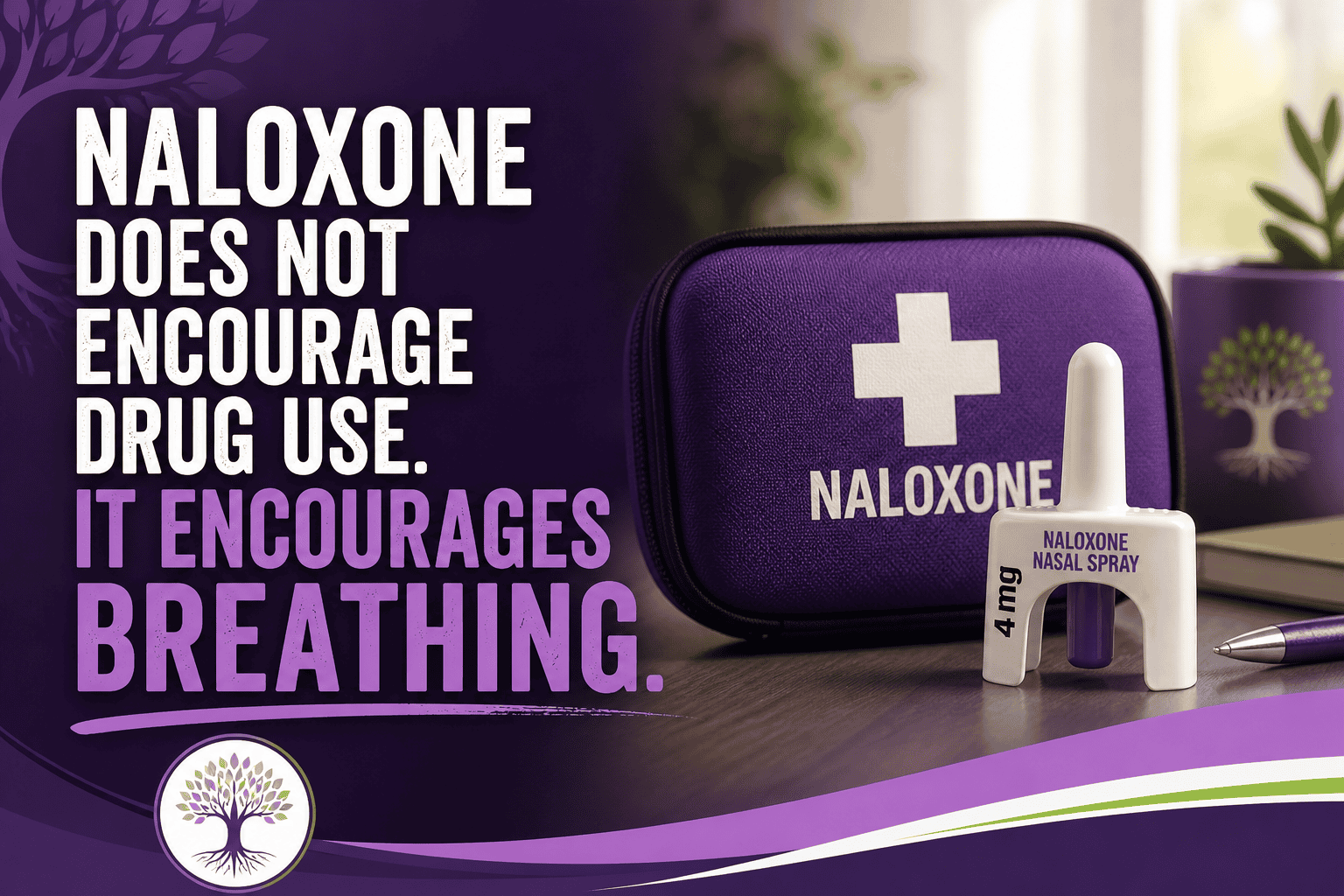
Naloxone Saves Lives by Restoring Breathing, Not Promoting Drug Use.
If you work with people impacted by substance use disorder, you know how fast myths spread and how slow truth travels. Naloxone is a medication that restores breathing during opioid poisoning, and Harm reduction is the public health stance that says survival comes first. As a CASAC in NY, you see how opioid poisoning reversal opens a door to care that death closes forever. This is also about fentanyl safety, since fentanyl can show up in unexpected supplies and raise risk for families, clients, and communities.
People say the same tired claims.
- It makes people use more.
- It wastes money.
- It keeps bringing people back.
- It makes people violent.
- It blocks treatment.
Those claims share one problem.
They treat breathing like something a person has to earn.
What Naloxone actually does
Naloxone is designed to reverse opioid effects long enough for breathing to return. CDC describes it as a lifesaving medicine and explains that it can reverse an opioid overdose. I call it what it is in the real world: opioid poisoning reversal.
If you are a CASAC in NY, you need language that stays accurate and nonjudgmental.
- Person with opioid use disorder.
- A person with a substance use disorder.
- Person in recovery.
You also need language that stays factual.
- This is not permission.
- This is not approval.
- This is emergency care.
Harm reduction is not a mood. It is a method.
Harm reduction means reducing risk right now, even when a person is not ready for other changes. CDC frames naloxone as part of overdose prevention work, and it highlights practical steps for access and use.
Harm reduction also means you stop pretending that punishment prevents substance use disorder.
- Safety prevents death.
- Connection supports change.
If you want treatment engagement, you start by keeping people alive long enough to choose it.
The data on opioid poisoning reversal is not small
A systematic review of community programs reported that many studies showed high survival after community naloxone administration, with eleven studies reporting 100 percent survival and others reporting 83 to 96 percent. That is opioid poisoning reversal in plain numbers.
No one claims perfection in emergency care.
- We still treat cardiac arrest.
- We still treat asthma attacks.
- We still treat seizures.
We treat them because people deserve another chance to live.
Myth: Naloxone makes people use more
This myth sounds clever until you look at the evidence.
A 2023 study found that naloxone access laws and pharmacy distribution were more consistently associated with decreases rather than increases in lifetime heroin use and injection drug use among adolescents. That finding undercuts the idea that access encourages risky behavior.
Harm reduction does not increase substance use disorder.
Harm reduction reduces death and buys time for care.
If you are a CASAC in NY, this matters in how you talk to families and community members who repeat myths like facts.
Myth: Naloxone wastes public money
This argument always skips the list of real costs.
- EMS calls.
- Emergency department visits.
- ICU stays.
- Long-term brain injury from oxygen loss.
- Funeral costs.
- Family destabilization.
- Lost work.
- Foster care when parents die.
Naloxone is not the expensive part of this crisis. CDC’s overdose prevention materials frame naloxone as a core tool for saving lives. That is what public health money is supposed to do.
If your community wants fewer repeat emergencies, you do not remove opioid poisoning reversal. You build faster follow-up and real access to treatment.
Myth: “They keep coming back.”
Sometimes people experience opioid poisoning more than once. That fact is painful. It is also not an argument against saving them.
Repeated reversals are not proof that Naloxone failed. They are proof that the person is still alive.
Harm reduction asks a better question.
What happens after the reversal?
- Warm handoffs.
- Peer support.
- Medication for opioid use disorder access.
- Housing support.
- Nonjudgmental follow-up.
If you are a CASAC in NY, you know that stabilization often takes more than one contact. That is not a weakness. That is how behavior change works.
Myth: Naloxone causes violence
Naloxone can precipitate withdrawal. Withdrawal can feel awful. Confusion and agitation can occur during any emergency.
That does not mean naloxone “creates violence.” It means the person woke up after opioid poisoning with their body in distress.
Your response should be calm and practical.
- Give space.
- Speak clearly.
- Explain what happened.
- Avoid crowding.
- Avoid lectures.
The goal is not to punish someone while they are awake.
The goal is opioid poisoning reversal and a safe transition to medical care.
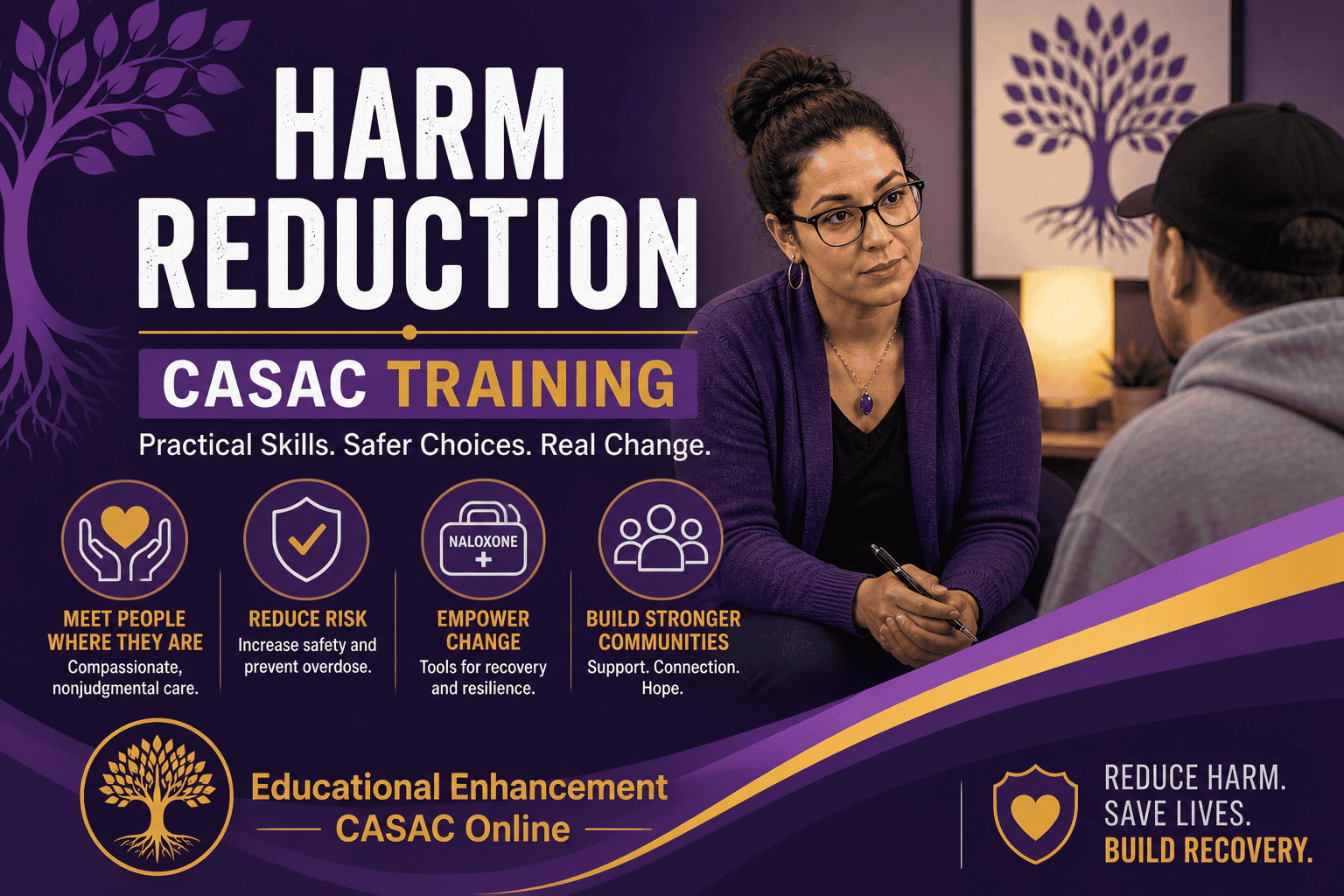
Harm Reduction CASAC Training
Recertifying as a CASAC, CAC, or CADC? Learn Harm Reduction Skills That Save Lives and Improve Engagement
Harm reduction is not a theory.
It is a daily practice. This OASAS-approved training helps you reduce risk, build trust, and support clients with practical safety planning and stigma-free counseling.
- Perfect for CASAC, CAC, and CADC professionals, this course offers:
- Self-paced, 100 percent online learning
- Real-world harm reduction strategies for alcohol and drug-related risk
- Safety planning skills that support engagement and retention in care
- Strong fit for renewal and professional development hours
Reduce harm. Build trust. Keep people alive long enough to change.
Fentanyl safety is the new baseline
Fentanyl is a powerful synthetic opioid, and the CDC states that naloxone can reverse an opioid overdose from fentanyl. fentanyl safety also matters because fentanyl can be mixed into other drugs, and people may not know what they are exposed to.
This is why “I do not use opioids” is not enough as a safety plan in 2026.
- Counterfeit pills exist.
- Polysubstance exposure exists.
- Unexpected fentanyl exposure exists.
Fentanyl safety means you keep Naloxone available, you keep more than one dose when possible, and you train people before the emergency hits.
What a CASAC in NY should say when myths show up
You do not need a long argument. You need short, steady lines.
- Naloxone restores breathing during opioid poisoning.
- Harm reduction keeps people alive long enough to engage in care.
- Opioid poisoning reversal does not reward substance use disorder. It prevents death.
- Fentanyl and Xylazine safety requires preparation, not blame.
- CASAC in NY work is about ethics, accuracy, and practical care, even when the public mood is harsh.
What you can teach families and communities to do
Keep it concrete.
- Carry Naloxone.
- Store Naloxone where people can find it fast.
- Learn the steps for opioid poisoning reversal before you need them.
- Keep more than one dose when possible, since fentanyl safety may require repeat dosing.
- Treat Harm reduction like a normal part of community health, not a controversial idea.
Conclusion
Naloxone does one job, and it does it well. It restores breathing during opioid poisoning reversal, and it keeps a person alive long enough for care, family, and change to remain possible. Harm reduction is the stance that says you do not withhold life-saving tools as punishment, and CASAC in NY practice is strongest when it stays precise, nonjudgmental, and grounded in evidence. fentanyl safety raises the stakes for everyone, since unexpected exposure is real, which makes preparedness the responsible choice.
Subscribe to Our Newsletter
Stay up-to-date with changes in the addiction recovery field, new illicit drug trends, treatment modalities, and new addiction counselor training opportunities.