
This article provides CASAC in NYS, CADCs, and CACs with a comprehensive overview of the challenges substance use counselors face, emphasizing the importance of self-care, collaboration, and advocacy. By addressing these issues, counselors can enhance their effectiveness and continue to support their clients on the path to recovery.
Substance use counselor challenges hit early, even when you care a lot and show up ready to work. If you are a CASAC in NYS or a CADC or CAC in another state, you already know the job can feel heavy on your mind and your body. This post breaks down the substance use counselor challenges you face in real settings and gives you self-care steps you can use right away, so you stay effective, steady, and able to keep doing the work.
Substance Use Counselor Challenges That Wear You Down
You can love this field and still get worn out.
You hear hard stories all day.
You watch relapse and loss.
You work inside systems that move slowly and require a lot of paperwork.
Substance use counselor challenges do not wait until you feel ready. They show up on busy days and quiet days, in sessions, and after you clock out.
Emotional burnout and compassion fatigue
Burnout is not a personality flaw. It is a work injury.
Watch for these signs:
-
You feel tired before work starts
-
You feel numb in sessions
-
You get irritated fast
-
You avoid calls and messages
-
You rush through documentation
These substance use counselor challenges are common, so you treat them like clinical data about your own capacity.
High caseloads and time pressure
High caseloads push you into constant reaction.
Use structure to protect your day:
-
Start each session with one clear goal
-
Use a simple note template
-
Schedule paperwork blocks, not “whenever” time
-
Group tasks like callbacks and referrals
-
Set a hard end time for work tasks
This is self-care. It protects your energy and your attention.
Self-Care That Works for Real Counselors
Self-care is not spa talk.
It is what keeps you from burning out and leaving the field.
Pick actions you can repeat:
-
Take a five-minute break between sessions
-
Eat food, not just caffeine
-
Turn your phone off for ten minutes after work
-
Use supervision for your stress and your questions
-
Talk to peers who understand the job
If you are a CASAC in NYS, your workload can feel nonstop. If you are a CADC or CAC, the demands still add up. Self-care keeps your skills sharp and your tone steady.
Self-care boundaries that protect you
Boundaries are part of good practice.
Use these habits:
-
Set expectations early with clients
-
Keep communication channels clear
-
Do not take crisis calls outside policy
-
Use supervision when you feel pulled into rescue mode
-
Document boundary issues as clinical observations
These steps reduce substance use counselor challenges tied to over-involvement and emotional overload.
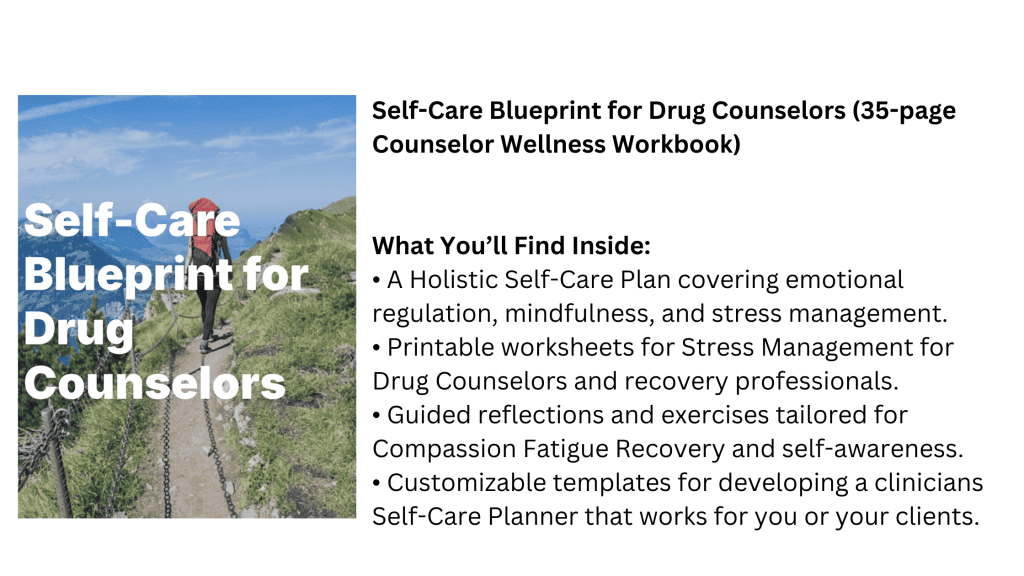
Go to Self-Care for Counselors Description Page
Relapse (Recurrence of symptoms), Motivation, and the Parts of the Job That Sting
Relapse happens.
So does low motivation.
You can respond without shame or lectures.
Recurrence of symptoms (Relapse) is not proof that you failed
When a client relapses, do a clean review:
-
What changed first
-
What trigger got ignored
-
What support was skipped
-
What needs to change in the plan this week
This keeps the work focused. It also supports self-care, since you stop carrying blame that does not belong to you.
Mandated clients and low buy-in
Some clients do not want treatment.
You still build engagement with small steps:
-
Ask what they want in the next 30 days
-
Ask what they do not want to lose
-
Set one goal they can hit this week
-
Reflect change talk when you hear it
Substance use counselor challenges get easier to manage when you stop trying to force motivation and start building it.
Co-Occurring Disorders, Stigma, and Systems That Fight You
Many clients deal with mental health needs and substance use at the same time.
Stigma also shows up in families, workplaces, and even treatment settings.
Co-occurring disorders raise complexity
Use teamwork and clear roles:
-
Coordinate with mental health providers
-
Get releases early
-
Clarify who handles what
-
Stay inside your scope
This protects you and the client. It is also self-care.
Stigma drains clients and counselors
Push back with practical actions:
-
Use person-first language
-
Teach families what relapse risk looks like
-
Keep documentation clear and respectful
-
Hold the line on dignity in your program culture
If you are a CASAC in NYS, or a CADC or CAC elsewhere, you are often the person who sets the tone for respectful care.
Conclusion
Substance use counselor challenges are real, and they do not disappear once you get licensed or feel confident. If you are a CASAC in NYS or a CADC or CAC, you can stay in this field longer and do better work when you treat self-care like part of your job, not an extra task. Use structure, supervision, boundaries, and peer support to keep substance use counselor challenges from turning into burnout. Self-care helps you stay steady, protect your clients, and keep showing up with skill and respect.
Subscribe to Our Newsletter
Stay up-to-date with changes in the addiction recovery field, new illicit drug trends, treatment modalities, and new addiction counselor training opportunities.