Toxicology or Urine drug test interpretation can make or break trust in the room. False positive urine drug screen results can light a client up with panic, anger, or shutdown. Toxicology results counseling is a skill, not a lecture, and drug testing in treatment should support care, not turn into punishment. If you want clients to stay engaged, you need accuracy, clean language, and a plan for what you do next.
I have lived the “label first, human second” version of care. When you have been homeless, sick, and judged, you learn fast that systems can use paperwork like a weapon. A urine screen can become that weapon, too, if you treat it like a courtroom verdict rather than clinical information.
So let’s make this practical.
What a urine screen can and cannot tell you
Urine drug test interpretation starts with one basic truth. Most first-line screens are immunoassays. They are fast and cheap. They are also presumptive. A positive result is not final until it is confirmed by confirmatory testing.
What a screen can tell you
-
A substance class may be present above a cutoff
-
A recent exposure may have occurred
-
A result may need confirmation before you act on it
What a screen cannot tell you
-
The exact amount used
-
The exact time of use
-
Impairment at the time of testing
-
The full medication story without context
Drug testing in treatment works best when you say this out loud to the client. It lowers fear and lowers the urge to argue.
Urine drug test interpretation also includes limits on what panels detect. Some immunoassays miss certain semi-synthetic or synthetic opioids, and some miss certain benzodiazepines.
That is a common reason a client says, “My screen is negative, but I took my prescription.” Your job is to check the test method, the panel, and the timing. Not to accuse.
False positives and confirmation testing basics
False-positive urine drug screen results occur for a few reasons.
-
Cross reactivity in immunoassays
-
Cutoff limits and detection thresholds
-
Medications and some OTC products trigger a presumptive positive
The fix is not an argument. The fix is confirmation.
Confirmatory testing is usually performed using mass spectrometry methods such as GC-MS or LC-MS/MS. These tests are more specific.
If you are doing drug testing in treatment and the result is unexpected, the clean move is simple.
-
Pause
-
Review meds and supplements
-
Ask about timing
-
Order confirmation when it fits policy and clinical need
False positive urine drug screen results can create real harm when people treat presumptive screens like facts. Mayo Clinic authors have warned that false-positive immunoassay results can lead to serious social consequences if not confirmed.
If you work with court-involved clients, this matters even more. People lose housing, visits, program placement, and trust over sloppy interpretation.
Urine drug test interpretation should protect the client from that.
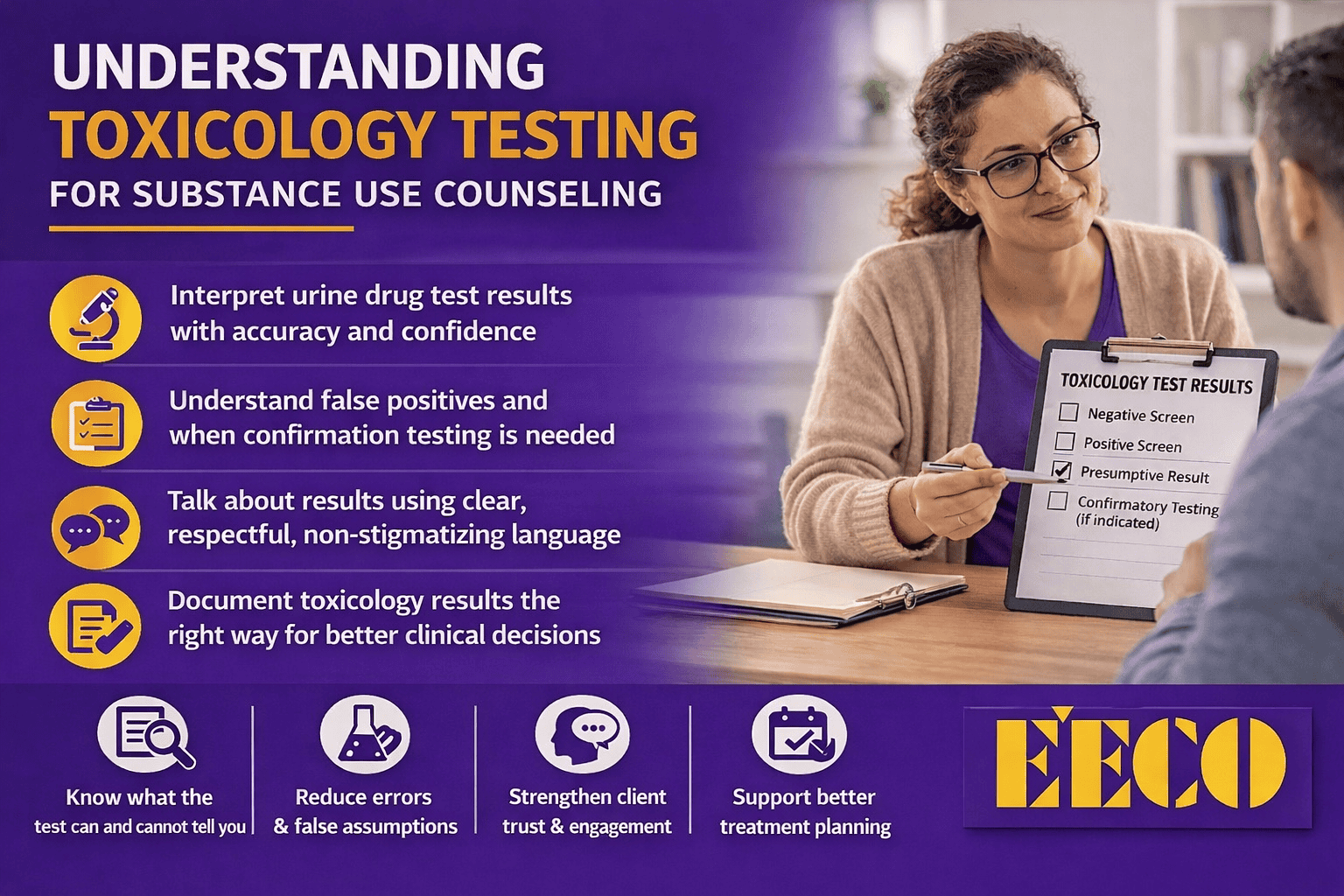
How to discuss results without stigmatizing language
Toxicology results counseling is not about catching someone. It is about clarity.
Here is the language that keeps the door open.
Instead of “dirty.”
Say “positive screen” or “results indicate recent use.”
Instead of “clean.”
Say “negative screen” or “no substances detected.”
Instead of “abuser.”
Say “person with a substance use disorder” or “person with risky use.”
Drug testing in treatment becomes safer when you set a tone that says, “We can talk about this.”
Try scripts like these.
-
“This is a screening test. It is not the final word.”
-
“Let’s review your meds and timing, then decide next steps.”
-
“My goal is accuracy, not blame.”
False positive urine drug screen results are the moment to show you are not there to shame them. That is how you keep them coming back.
Documentation phrases that work in real programs
You want your note to show clinical reasoning and respect.
Use phrases like:
-
“Urine screening result reviewed with client using nonstigmatizing language.”
-
“Client informed that screening results are presumptive pending confirmation when indicated.”
-
“Medication list reviewed for potential cross reactivity and recent changes.”
-
“Client provided narrative of possible exposure and timing.”
-
“Plan updated to include support steps and follow-up testing per program policy.”
Toxicology results counseling should show up in the note as collaboration, not confrontation.
Urine drug test interpretation also benefits from one extra sentence that many counselors skip.
-
“Result discussed in context of treatment goals and safety plan.”
That tells an auditor, supervisor, or payer that you used the data clinically.
When results change, the level of care
Drug testing in treatment is one data point. It can still affect the level of care when it signals risk.
Urine drug test interpretation should trigger a level of care review when you see:
-
Repeated unexpected positives with rising risk behavior
-
Missed sessions plus positive screens
-
Safety issues like intoxication, driving risk, or unstable housing
-
Withdrawal risk that needs medical support
-
Escalation in cravings, triggers, or crisis events
Your response should be structured.
-
Update the relapse prevention plan
-
Increase contact frequency
-
Add peer support or recovery coaching
-
Coordinate with medical providers when the risk is high
-
Discuss a higher level of care when safety or stability is failing
False positive urine drug screen results should never trigger a level of care change until you have done the basics. Review meds. Review timing. Confirm when indicated.
That is the line between care and punishment.
Toxicology results counseling also includes one hard truth that protects everyone. A positive test does not tell you why. It does not tell you the motive. It does not tell you readiness. It tells you that you need more assessment.
A quick client-centered workflow you can use today
Use this five-step flow every time.
-
Share the result using neutral language
-
Ask for the client’s explanation first
-
Review meds, supplements, and timing
-
Decide on confirmation or follow-up per policy
-
Make a short plan that fits the next 24 hours
This keeps drug testing in treatment connected to support.
This also protects you from the “notes pile up” problem. If you document the conversation in session, you leave with it done.
Keep the test from becoming the treatment
Urine drug test interpretation is not a moral score. False-positive urine drug screen results are real, and immunoassays remain presumptive until confirmed. Toxicology results counseling is about maintaining trust, keeping language respectful, and keeping the client engaged. Drug testing in treatment works when you use it as clinical information, then pair it with assessment, planning, and level-of-care decisions that match the client’s safety and stability.
If you do that, you get better care and better retention. You also stop turning a lab slip into a courtroom scene.
Subscribe to Our Newsletter
Stay up-to-date with changes in the addiction recovery field, new illicit drug trends, treatment modalities, and new addiction counselor training opportunities.