
This article provides a comprehensive overview of benzodiazepines and the importance of substance use counseling (CASAC in NY, CADC, CAC), ensuring a unique and engaging narrative while adhering to the specified guidelines.
Benzodiazepines, often referred to as “benzos,” are a class of medications that have become a focal point in discussions about mental health treatment and substance use counseling. These drugs, which include well-known names like Xanax (alprazolam), Klonopin (clonazepam), and Valium (diazepam), are primarily prescribed for their calming effects. However, their potential for misuse and addiction raises significant concerns, making it essential to understand their effects, risks, and the role of counseling in managing substance use disorders.
What Are Benzodiazepines?
Benzodiazepines are central nervous system (CNS) depressants that work by enhancing the effects of gamma-aminobutyric acid (GABA), a neurotransmitter that inhibits brain activity. This mechanism helps to alleviate anxiety, induce sleep, and prevent seizures. While these medications can be effective for short-term treatment of conditions like anxiety disorders and insomnia, their long-term use can lead to serious complications.
Common Uses of Benzodiazepines
- Anxiety Disorders: Benzodiazepines are frequently prescribed for generalized anxiety disorder and panic attacks. They provide rapid relief from acute anxiety symptoms.
- Insomnia: These medications are often used for short-term management of sleep disorders, helping individuals fall asleep faster and stay asleep longer.
- Seizure Disorders: Benzodiazepines can be effective in controlling seizures, particularly in emergency situations.
- Muscle Relaxation: They are also used to relieve muscle spasms and tension.
- Procedural Sedation: Medications like midazolam are commonly used to sedate patients before surgical procedures.
The Risks of Benzodiazepines
Despite their therapeutic benefits, benzodiazepines carry significant risks, particularly when used improperly or for extended periods.
Short-Term Side Effects
When taken as prescribed, short-term side effects may include:
- Drowsiness and sedation
- Dizziness and impaired coordination
- Confusion and memory issues
Long-Term Consequences
Prolonged use can lead to:
- Tolerance: Over time, individuals may require higher doses to achieve the same effects, increasing the risk of dependence.
- Dependence and Withdrawal: Stopping benzodiazepines suddenly can lead to withdrawal symptoms, including anxiety, insomnia, and seizures.
- Cognitive Impairment: Long-term use has been associated with memory problems and cognitive decline.
- Increased Risk of Overdose: Mixing benzodiazepines with other CNS depressants, such as alcohol or opioids, significantly heightens the risk of overdose, which can be fatal.
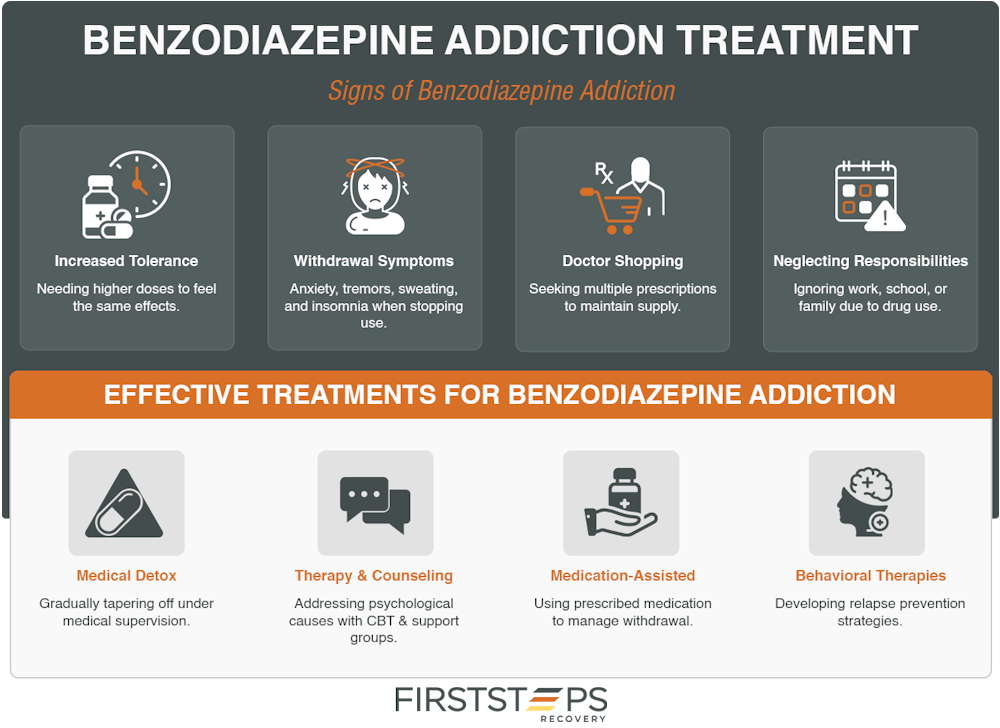
Image Source: First Steps Recovery
Understanding Substance Use Counseling
Substance use counseling (CASAC in NY, CADC, CAC) plays a crucial role in addressing the challenges associated with benzodiazepine use and misuse. This form of therapy aims to help individuals understand their relationship with substances, develop coping strategies, and work towards recovery.
The Role of Counseling in Recovery
CASAC in NY, CADCs, and CACs provide a supportive environment where individuals can explore their feelings and behaviors related to substance use. Key components include:
- Assessment: Counselors evaluate the extent of substance use and its impact on the individual’s life.
- Goal Setting: Together, the counselor and client establish realistic goals for recovery, which may include reducing or eliminating benzodiazepine use.
- Coping Strategies: Counselors teach clients effective coping mechanisms to manage anxiety and stress without relying on medications.
- Relapse Prevention: Counseling helps individuals identify triggers and develop plans to avoid relapse.
Types of Counseling Approaches
Several therapeutic approaches can be effective in substance use counseling:
- Cognitive-Behavioral Therapy (CBT): This approach focuses on changing negative thought patterns and behaviors associated with substance use.
- Motivational Interviewing: This client-centered technique helps individuals explore their motivations for change and enhance their commitment to recovery.
- Support Groups: Group therapy provides a sense of community and shared experience, which can be invaluable in the recovery process.
The Importance of Education and Awareness
Education about the risks and benefits of benzodiazepines is vital for both patients and healthcare providers. Understanding the potential for misuse can lead to more responsible prescribing practices and better patient outcomes.
Patient Education
Patients should be informed about:
- The risks associated with long-term use of benzodiazepines.
- The importance of adhering to prescribed dosages.
- The potential for dependence and withdrawal symptoms.
Provider Awareness
Healthcare providers must remain vigilant in monitoring patients who are prescribed benzodiazepines, particularly those with a history of substance use disorders. Regular follow-ups and open communication can help identify issues early and adjust treatment plans as necessary.
Navigating the Path to Recovery
Recovery from benzodiazepine dependence is a journey that requires commitment, support, and often professional intervention.
Steps to Recovery
- Acknowledgment: The first step is recognizing the problem and the need for help.
- Seeking Help: Engaging with healthcare professionals and counselors who specialize in substance use can provide the necessary support.
- Detoxification: In some cases, medically supervised detox may be required to safely manage withdrawal symptoms.
- Ongoing Support: Continued counseling and support groups can help maintain sobriety and prevent relapse.
The Role of Family and Friends
Support from loved ones can significantly impact recovery. Family members and friends should be educated about benzodiazepine dependence and encouraged to participate in the recovery process.
Conclusion
Benzodiazepines can be effective tools for managing anxiety, insomnia, and other conditions, but they come with significant risks that can lead to dependence and misuse. Substance use counseling (CASAC in NY, CADC, CAC) is essential for helping individuals navigate these challenges and providing the support and strategies needed for recovery. By fostering awareness and understanding, we can create a more informed approach to benzodiazepine use and promote healthier outcomes for those affected by substance use disorders.
Current OASAS (CASAC in NY) & NAADAC Approved (CADC; CAC)
Addiction Counselor Courses for Renewal Certificate
To see our
Addiction Counselor Course listings,
head over to
Educational Enhancements
Online Addiction Counselor
Education and Training Store
Subscribe to Our Newsletter
Stay up-to-date with changes in the addiction recovery field, new illicit drug trends, treatment modalities, and new addiction counselor training opportunities.